Currently working on: Last (praise be) edits for my November 2009 release
SEDUCED BY SHADOWS
Mood: Chilled ~ I'm at my day job & the AC here is set to 4th Level of Hell (which is where snowballs do stand a chance)
However, I have the most fun with the names of minor characters. Usually, I pick out one of their main characteristics or their occupation; say, farming. Then I pull up the online thesaurus and plug in the word farm. Synonyms include field and meadow. The last name of Fields or Meadows would be OK.
place I go is the library and the local used book store to find general history books on my era. These give me the overview I need of the time period, so I can narrow things down and pick a specific location and year. I don't like writing in generalities, so establishing a firm time and place is critical to me (i.e., medieval England must narrow down to 1096 in Alnwick, Northumberland). During this phase I frequently find some historical incident upon which to hang the story, or which I can at least include in the background. At a minimum, I must know what would be occupying my characters' thoughts and conversations. (a war, the king's death, those new windmills from Normandy, or whatever).
and, even more immediately useful, the dictionary program on my Mac, which accesses New Oxford American Dictionary, the Oxford American Writers Thesaurus, and Wikipedia, all at once. I hit them at least 20 times a day for word origins and derivations, word choices, and general knowledge--so often that I frequently default to the Dashboard widget for the Dictionary, to check when a word came into use and what it meant at the time. Excessive, perhaps, but I am that nerdy kid that used to sit and read the Encyclopedia Britannica. It comes naturally.I write contemporaries and romantic suspense with a futuristic bent. One would think these two genres don’t require much research, but I always find I need to do some anyway. In my contemporaries I’m often doing research on places. For the most part I write about places I know, like
So, for researching places in contemporary times I use Mapquest, you can even map out international sites. I also go to Chamber of Commerce sites for towns, and for International Travel I always consult the State Department website: It has great overviews of the country, its history and politics, travel alerts, entry and exit requirements, crime, embassy access—just a plethora of information. This is also really helpful for suspense novels too. For example, when I was writing Expendable I needed better information on
Clothing is an area where I am very challenged. I know nothing about design and anyone who knows me can attest to that in my personal attire. So, when it’s time to pick clothing for my characters I use catalogs and Internet stores. I’ll find models dressed in something I like or think fits my characters and describe that. I have to keep careful notes though, because I certainly won’t remember it. Oh, and I love watching Project Runway on TV. :)
For my suspense novels I do a lot of research through interviews with people—policemen, firemen, soldiers, etc. I’m fortunate in that I have a husband and two sons who know a lot about guns, the military, law enforcement etc.
One of my favorite research books for suspense is The Writer’s Complete Crime Reference Book by Martin Roth. It includes the fundamentals of investigation, criminal motives, escape methods, weapons, rules of evidence, slang used by criminals and police, and much more. It’s a great starting place and then gives me ideas of where else to do research.
Finally, for my futuristic research I primarily do a LOT of reading. I subscribe to Nature, a magazine that gives brief summaries of all types of cutting edge research from which I can extrapolate to the future. I subscribe to a number of journals or go to the library in medicine, physics, and computer science. This is where University libraries are a godsend. I also read the daily newspaper voraciously. Ideas are everywhere!

My Romance With Research- it’s better than chocolate and less fattening.
Working on~ something very special involving plastic flamingos.
Mood: peacefully productive
For me, life seems to be one big research binge. Everywhere I go I take notes and make observations about the tiny details of life. If I weren’t a writer I’d be . . . weird. Research is inspiration. I could wax poetic about research forever.
Yes, historical authors, we contemporary gals do lots of it too. Okay, okay you do more. So much more you can tell the contemporary authors from the historical authors at the summer convention because contemporary authors have tans.
I’m a stash and dash researcher. As I write I often hit a spot and go spinning into research, then return with the information I needed to proceed with the story.
However--DANGER! : Research is a lovely sink hole that will suck you in up to your eyeballs and make you vanish for hours only to emerge and realize you haven’t written any pages today. LOL I don’t care. I LOVE research.
A few highlights of the thousands of research binges I have been on include: paranormal activity, Elvis, geographic details of Vegas, cars (and I’m talking details like how does the trunk on a 1985 Jag open?) England, Druids, native plants, ways to murder people, police process, courtroom procedure, the insurance industry, the toy manufacturing industry, ice cream, genetics, obscure hair disorders, the psychology of being blonde, song lyrics, twins, handbag trends, how supermarket clerks function, and for every job I’ve ever given a hero or heroine I’ve researched that job in detail if not actually held down the job!
As every modern writer knows the internet descended upon a cloud from heaven directly to our PC’s. Yesterday I ran across a blog about interiors used in the movies of the late thirties. I mean really, I thought I was the only person on the planet obsessed with the curtains in the tragically beautiful “rich dad” bedroom of the daughter in Stella Dallas, or the amazing New York apartment in Sentimental Journey. I personally have found that if you manage to word it correctly you can find A-N-Y-T-H-I-N-G on the internet. Being obsessed with old movies, my favorite source for movie references is The Internet Movie Database. http://www.imdb.com Any actor or film made is usually listed on their site.
As a matter of fact you can find more than you bargained for on the internet- I advise putting that safe search feature to use to avoid startling interpretations of the English language. No, I meant Pastry not Pasty!
That kind of full access to the world of minute detail can get so boring, ha ha. So when it comes to hands on, my favorite research is going to the movies, both live and in my living room. Turner Classic Movies and I have logged enough hours to qualify as a full on love affair. Try film credits for great character names!
Other favorite types of live research I love: antique stores, old hardware stores, new cities and towns, truckloads of books of course, library delving and direct interviews with relevant subjects.
For She Woke Up Married I spent time with Elvis impersonator, Danny Vernon. Sometimes you just need to walk a mile in someone’s Blue Suede Shoes, you know? For The Forever Summer I spent many hours interviewing my local supermarket clerks about the odd details their job entails and the language they used for different items in the store. Who knew the big displays for fruit were called orchard bins? I loved getting a letter from a fan who worked in a supermarket complimenting me on getting the lingo and actions down.
That’s the big payoff--when you do it right. When you do it wrong, they will let you know, too, but forgive them, they at least read your book. What was your favorite research binge of all time? www.suzmac.com
Google :: The Google image search is the perfect way to get an idea of just what your characters look like. Meet Xavier, the hero of the book I should be revising as I type this, Driven to Distraction.
Hero Archetypes :: This is a great site for heroes & heroines. It helps solidify their character in your mind. Xavier is a CHARMER: fun, irresistible, unreliable, creates a party, smooth operator, playboy, rogue. Leo Dicaprio. (why does Leo keep coming up? Seriously...here, astrology, ennegrams...I need to embrace Xavier's inner Leo!)
Enneagrams :: A lot of writers swear by ennegrams. Xavier is Type Seven: The Enthusiast. However, I use these mainly for motivation. Knowing that sevens "want to maintain their freedom and happiness, to avoid missing out on worthwhile experiences, to keep themselves excited and occupied, to avoid and discharge pain" helps me keep perspective.
After I gather this information online, I turn to two books I can't create characters without. A simple Astrology book. These are great for basic character traits. Grab one on any bookstore clearance table, they are everywhere. Then, there is a modern relationship Astrology book I adore -- He's Just Not In The Stars. It goes deeper into the nuances of each sign, and therefore, deeper into character description.
I have always been a closet historian, knowing just enough to make me extremely dangerous. Studying Western Civilization in college gave me enough knowledge to become addicted to the subject for life. It came in handy last year when I decided to write two historical romance novels about ancient Roman Britannia. I erroneously thought, “Hey, I’ve been studying this period for years…this should be a breeze!”
ow were babies delivered? Did they wear gloves in the winter? What was the tack like for the horses? Did they wear underwear? Well, you get the idea. Those questions plagued me. So I sat in my comfy chair, closed my eyes, and concentrated on the story. This, to me, is the best part of writing…shutting out the modern world and putting yourself in another time and place. Imagining what your day would be like as a Roman soldier, a Celtic queen, or a gladiator. Not focusing on what’s on the page, but what's NOT on the page, what happened before and after. Since I write fantasy, as well, the process is the same. Once you are there, you discover what questions to ask and then start your research. One of my best mentors used to tell me, “Research is a double edged sword; too much, and you will get lost and never finish the book; too little, and you betray your readers. Research to your story…find out enough to move it forward, to keep it vibrant. You are a writer, not a historian.” I’ve always taken that advice to heart.
I have been very fortunate to find real historians to help me with my work and to validate the facts. The Frazier Museum and Association of Renaissance Marshal Arts have been invaluable to me. There are countless resources out there; libraries, museums, internet, and universities, just to name a few. Below is a very short list of a few internet sites I have used. 
e eleventh century called the Order of The Hatchet. Now that's cool. So my heroine became a knight in an order that, in my world, still exists in the 21st century, only instead of fighting soldiers in a medieval Crusade they fight supernatural evil in the city.
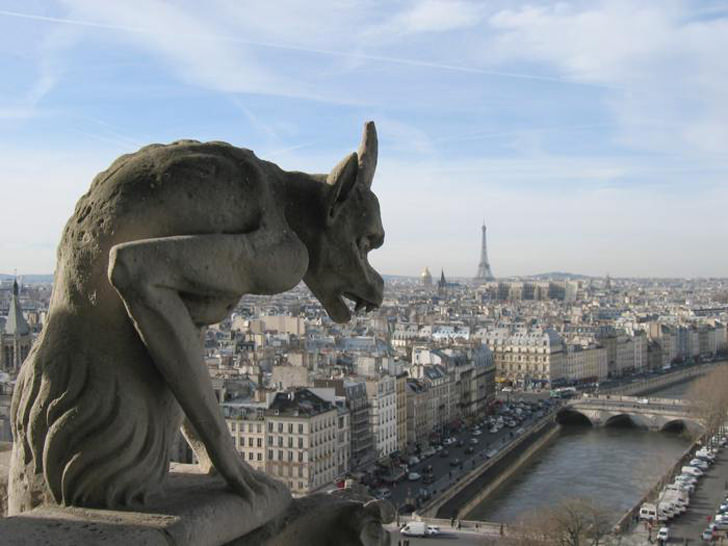
eam about writing about them. And when I go there, it's even more than a travel in space. When I see things I've studied in old engravings, I get an enormous rush of travel in time, to the time and place once sketched a hundred or so years ago. I can see it as it was, as well as as it is now. See if you can get what I mean from my pictures:
e in a d
ream over thirty years ago, set in the remote jungles of the Yucatan among the Maya. But I studied them in college and have always been fascinated with the Mayan culture. So when I had my chance, I had to see the ancient pyramids and temples swallowed up by jungle and only now being excavated enough to visit extensively.
modern I won't recognize the past that fascinates me? Will I find stories to write, even if the market isn't interested in them?
Susan Lute